
Read time: 6 minutes
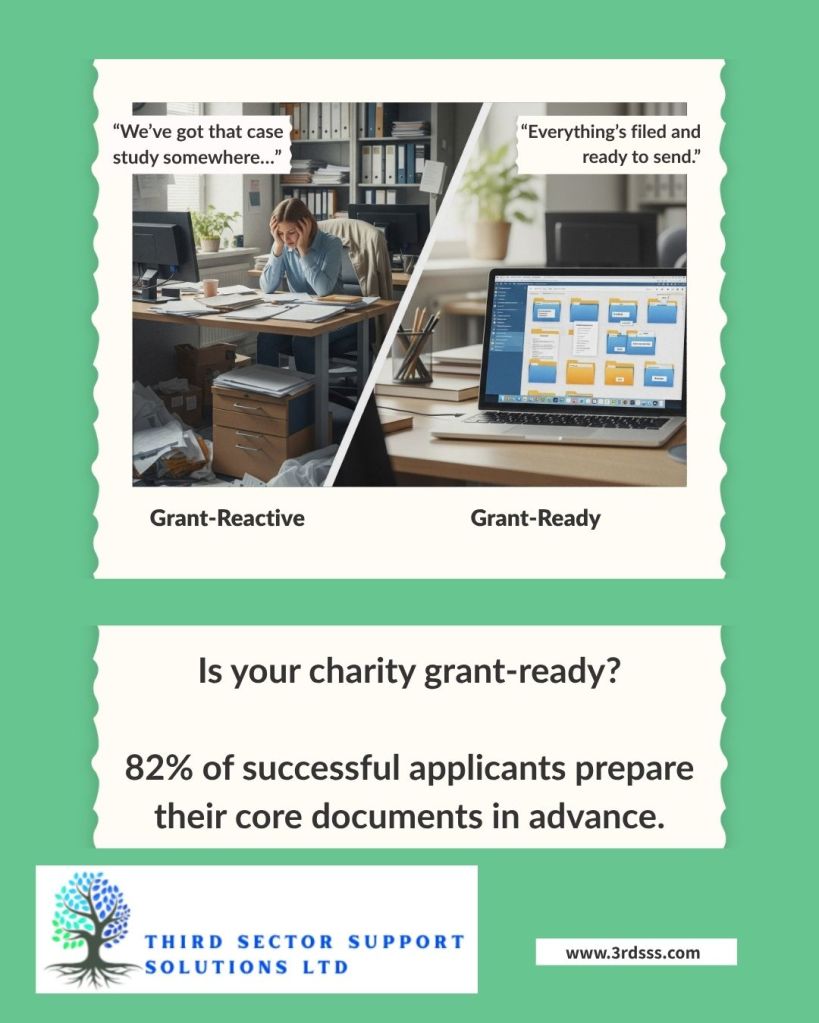
Your charity does brilliant work. But when that perfect grant opportunity lands in your inbox, can you respond with confidence? Research shows 82% of successful applicants prepare their core documents well in advance—and there’s good reason for that.
Grant readiness isn’t about having a crystal ball. It’s about having the right foundations in place so you can move quickly when opportunities arise. And crucially, it’s about having all this information organised and accessible—whether that’s a physical folder system or a digital solution.
Consider using a tool like Evernote, Notion, Google Drive, or OneDrive. Personally, I use Evernote because its AI search function means I can find anything quickly—even when I’ve inevitably misfiled something. The key is having everything searchable and accessible from anywhere.
What’s brilliant about these platforms is that they’re all shareable across your organisation. You can give your whole team access to work collaboratively on documents, or set permissions so only certain people can edit while others can view. No more emailing documents back and forth or wondering who has the latest version.
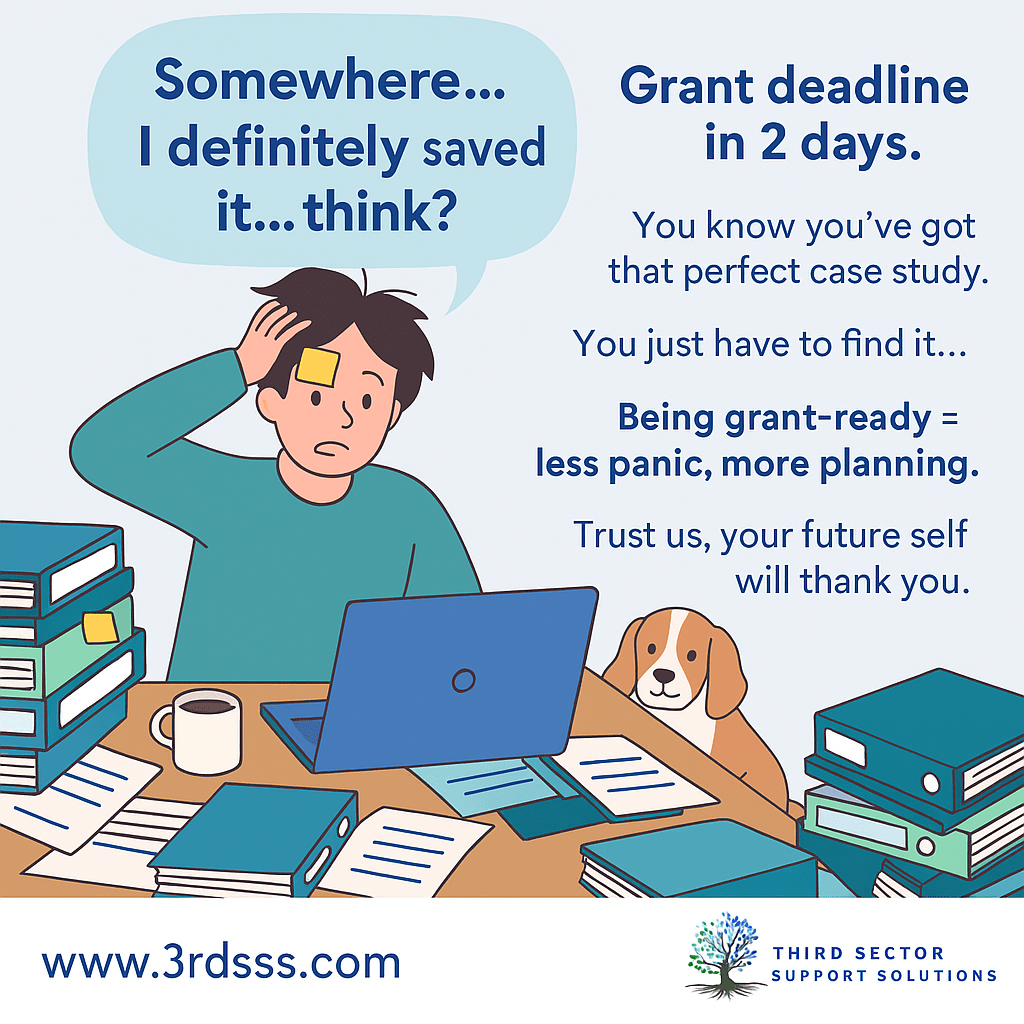
There’s nothing worse than knowing you have that perfect case study somewhere but spending an hour hunting for it while a deadline looms. We’re all human—things get misfiled. But good systems with search functionality can be a lifesaver.
Here’s your practical checklist to get there.
The 15-Second Test

Before diving into paperwork, start with this: can you explain your charity’s mission in 15 seconds? If a funder asks “What do you do?” at a networking event, your answer needs to be clear, compelling, and memorable.
Yes, “elevator pitch” sounds like corporate sales speak—but here’s the thing: when it comes to funders, you ARE selling. You’re selling your vision, your impact, and your worthiness for investment. The charity sector needs to embrace these sales fundamentals because they work.
Your 15-Second Template: “We do [specific activity] for [target group] which helps [clear outcome/benefit].”
For example: “We run cooking workshops for isolated older people which helps reduce loneliness and improves nutrition” or “We provide mentoring for care leavers which helps them secure stable employment.”
Practice this until it flows naturally. It’s the foundation everything else builds on—and yes, it’s sales. Good sales.
Essential Documents to Prepare Now
Your Constitution or Governing Document Keep an up-to-date PDF ready to send. Many funders want to see this, and scrambling to find it wastes precious time.
Latest Annual Accounts Filed with the Charity Commission? Great. Have them easily accessible in digital format. Small charities often overlook this basic requirement.
Charity Commission Registration Details Your charity number should be at your fingertips, along with confirmation of your registered charitable purposes.
Bank Details and Statements Recent bank statements (usually last 3-6 months) are frequently requested. Keep them organised and readily available.
Strategic Documents That Set You Apart
Your Change Plan Simply put: how does what you do lead to the change you want to see? Write down your end goal, then work backwards – what steps need to happen to get there? One page is plenty.
Project Planning Framework For each project, map out what you put in (money, time, people), what you do (activities), what you produce (immediate results), and what changes (longer-term impact). This helps with both planning and proving your worth.
Evidence Collection Keep a running collection of stories, photos, testimonials, and data throughout the year. Don’t scramble for proof when you need it – collect it as you go.
How You Measure Success Write down how you know if your work is making a difference. Simple surveys, feedback forms, or tracking numbers – whatever works for your charity.
What Could Go Wrong (And Your Plan B) Think through potential problems and how you’d handle them. Shows funders you’re realistic and prepared.
Essential Policies Safeguarding, equality and diversity, data protection – the basics that funders expect to see. Keep them current and accessible.
Financial Readiness
Realistic Budgets Practice creating project budgets for different funding amounts. Understanding your true costs (including overheads) prevents nasty surprises later.
Cash Flow Awareness Know your charity’s financial position. Can you manage grant payments that arrive months after you start work? Plan accordingly.
Building Your Grant Intelligence
Funder Research System Keep a simple spreadsheet of relevant funders, their priorities, typical grant sizes, and application deadlines. Update it regularly.
Application Calendar Map out major deadlines throughout the year. Some of the best opportunities have annual cycles—missing the deadline means waiting another year.
Common Readiness Gaps
Many small charities stumble on these areas:
Partnership Agreements: If you’re collaborating with other organisations, have clear agreements in place before applying for joint funding.
Board Engagement: Ensure your trustees understand your funding strategy and can provide references when needed.
Communication Materials: A simple project information sheet or organisational brochure can support your applications effectively.
The Reality Check
Grant readiness doesn’t mean being perfect—it means being prepared. Small charities often compete with larger organisations, but your agility and direct community connection are genuine strengths.
Focus on having robust basics rather than impressive presentation. Funders want to see authentic impact, not glossy marketing.
Your Next Steps
- Review your core documents—are they current and accessible?
- Practice your 15-second pitch with colleagues
- Set up a simple system for tracking funding opportunities
- Block time monthly to maintain your grant readiness
The charities that consistently secure funding aren’t necessarily the largest or flashiest. They’re the ones that do their homework, know their strengths, and can respond professionally when opportunities arise.
Being grant-ready means being opportunity-ready. And in today’s competitive funding landscape, that preparation often makes the difference between success and disappointment.
 The Art of Stupidity